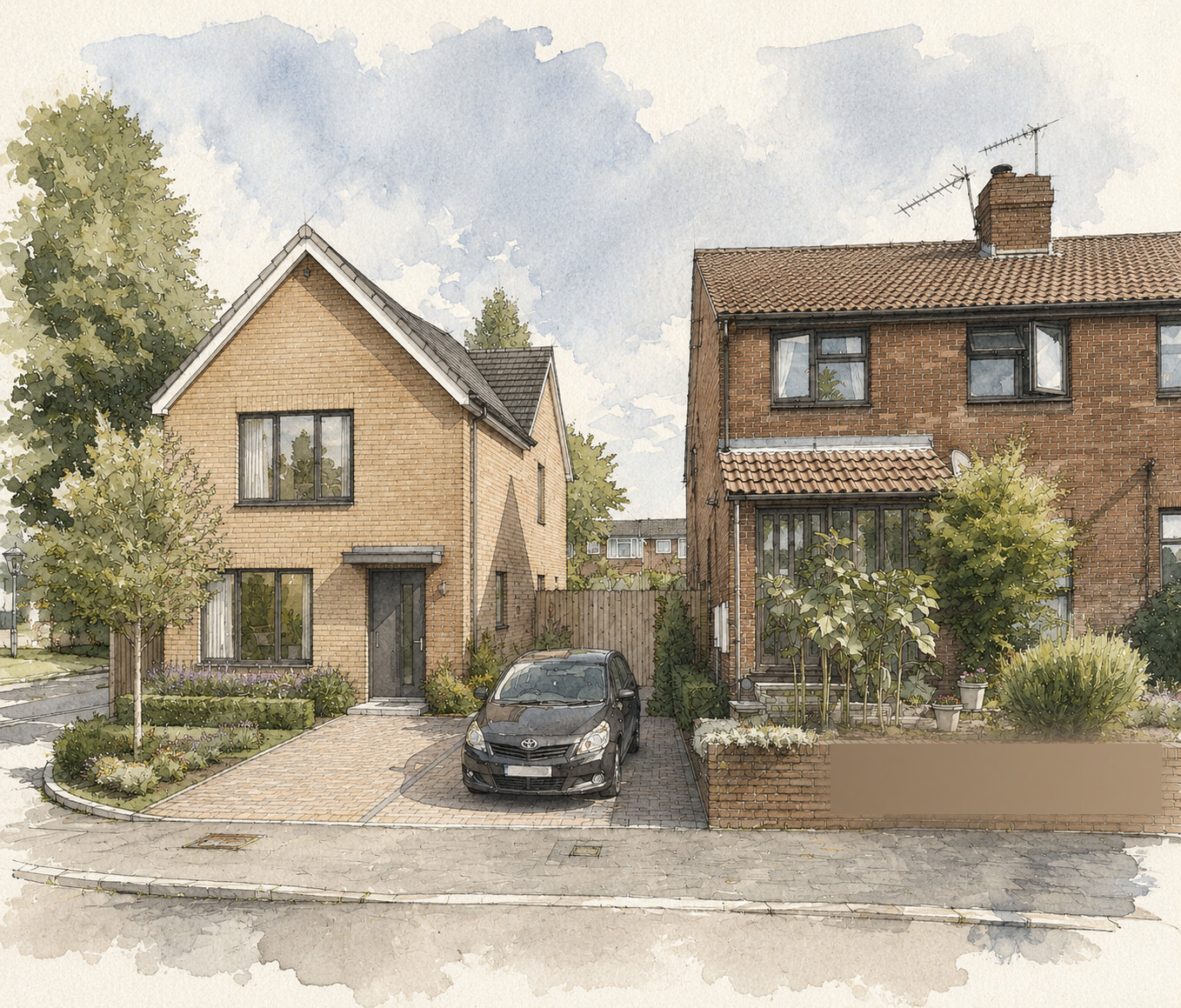
Photography pending — real completed house extension required (Tier 1 only, per Homepage freeze record)
House Extensions

How much can you actually add to your home?

Before you think about design, it helps to know what's realistic. We help homeowners across Milton Keynes and the surrounding area understand what their site can support, then turn that into a plan that works.

This page is for homeowners considering a single-storey, double-storey or wrap-around extension to an existing house.

  • Rear
  • Side
  • Wrap-around
  • Double-storey
  • Rear + Side

Whichever describes your project, the first real question is usually the same one.

Planning permission

Planning permission, or permitted development?

Permitted Development rights allow many single-storey rear extensions without a planning application, provided they stay within set limits on height, depth and proximity to boundaries. Go beyond those limits, or add a side or wrap-around extension in most cases, and you'll usually need full planning permission instead. Knowing which route applies before committing to detailed drawings avoids the two most common ways extensions go wrong. Read more on Planning Permission vs Permitted Development →

Decision diagram: whether a rear extension falls within Permitted Development, or requires a full planning application.

Long description. Starting from an existing house, a rear extension is proposed. If the extension stays within Permitted Development limits, it qualifies for a Lawful Development Certificate, known as an LDC, confirming that no planning application is required. If it exceeds those limits, a full planning application must be submitted instead.

Every property is different, so the first step is understanding the constraints.

Our approach

We check feasibility before full drawings.

Rather than starting with detailed drawings, we begin with a feasibility review — establishing what the site can support, what planning route applies, and where structural or Building Regulations issues are likely to arise. Design and technical coordination happen alongside each other, not one after the other, so nothing discovered late forces a redesign. Read more about our approach →

Once feasibility is established, here's exactly what happens next.

Annotated planning drawing — pending (optional asset, Stage 5D)
How it works

What happens once you get in touch.

01

Initial Discussion

Understanding your objectives, the site and any known constraints before discussing the most appropriate route forward.

02

Feasibility

Typically 1–2 weeks — establishing what the site can support and which planning route applies before any detailed drawings begin.

03

Design Development

Initial ideas are refined into a coordinated proposal that responds to the site, planning requirements and your brief.

04

Planning

Permitted Development or a full planning application — decided within a statutory 8-week period once submitted.

05

Technical Design

Building Regulations drawings and structural coordination, prepared so construction can proceed with confidence.

06

Construction Support

Where required, we continue supporting the project during construction, helping resolve design queries as they arise.

With the process clear, here are the questions we're asked most often.

Common questions

Questions about extending your home.

Do I need planning permission for a house extension?

Not always. Many single-storey rear extensions fall under Permitted Development, provided they stay within set limits on height, depth and boundary proximity. Anything larger, or a side extension in most cases, usually needs a full planning application, which local authorities aim to decide within 8 weeks. We check which route applies to your specific project before you commit to detailed drawings.

What's the difference between Permitted Development and planning permission?

Permitted Development is a set of national rules that let certain extensions go ahead without a planning application, provided they meet fixed size and position limits. Planning permission is a full application assessed by your local authority against its own policies — used when a project falls outside those limits, or in some conservation areas and for listed buildings.

Will I need Building Regulations approval?

Yes — Building Regulations apply to almost every house extension, regardless of whether planning permission was needed. They cover structural safety, insulation, fire safety, ventilation and drainage. We prepare Building Regulations drawings alongside the design work, rather than as an afterthought, so structural decisions are coordinated from the start.

Do I need to tell my neighbours about a Party Wall Agreement?

If your extension involves work on or near a shared boundary wall, the Party Wall Act usually requires you to notify your neighbours before work starts. We flag this early in the process so it doesn't become a late surprise, and can point you toward next steps if an agreement is needed. Read more on Party Wall & boundaries →

Can you coordinate structural engineers and other consultants?

Yes. Most extensions need a structural engineer, and larger or more complex ones may need other consultants too. We coordinate this alongside the design and Building Regulations work, so decisions are made together rather than discovered as conflicts later in the process.

If a project like this looks familiar, here's what it can look like once it's built.

Related projects

We've done this before.

Every one of these started with the same feasibility-first conversation.

Want to understand more first?

That's fine.

Either way, here's what you should already understand by this point.

What you'll know before you get in touch.

  • Whether Permitted Development is likely to cover your project, or if you'll need a full planning application.
  • The typical stages of an extension project, from feasibility through to Building Regulations.
  • Roughly how long the process takes, including the statutory 8-week planning decision period if needed.
  • What the next step should be for your specific situation.

Let's find out what's possible.

A feasibility review is the fastest way to know what your site can support, before you commit to anything else.

Arrange a feasibility review Send an email

Feasibility reviews are focused on understanding your site and identifying the most realistic route forward.